The Role of BESS in Climate Extremes
July 28, 2025
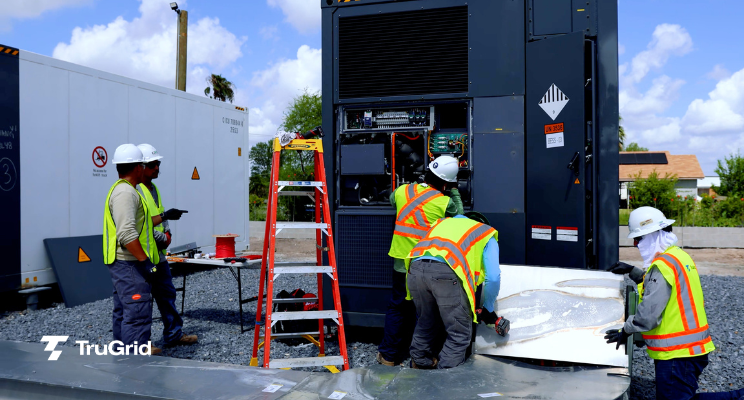
When temperatures soar into triple digits or hit the deep freeze, many people reach for the thermostat. These weather extremes can create surges in electricity use that strain the power grid, forcing utilities to consider rolling blackouts. But there are ways that energy markets are eliminating lapses in power: battery energy storage systems (BESS) offer a fast, clean, and more flexible way to keep the lights, air conditioning, and heat on when it matters most.
Weather-Driven Demand Is Rising
Record-breaking heat waves, stronger winter storms, and aging grid infrastructure are increasing the urgency for grid-scale storage. In 2023, the United States installed nearly 8 gigawatts (GW) of battery capacity, marking a record year, according to the American Clean Power Association (ACP). That number rose another 34 percent in 2024, with Wood Mackenzie reporting more than 12 gigawatts installed and predicting even steeper growth ahead.
Why? Because battery storage works.
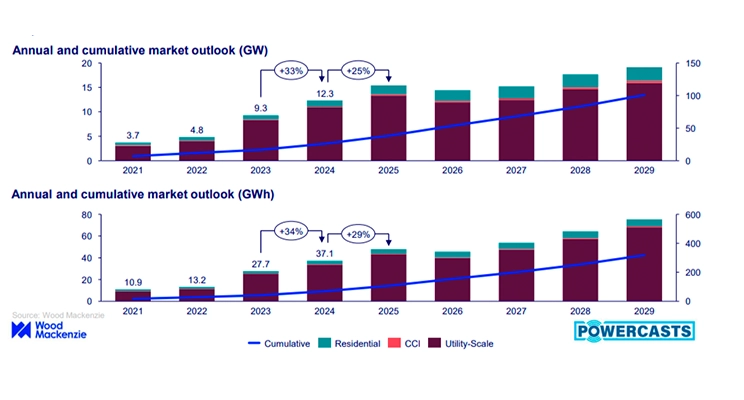
Annual installations are projected to reach over 12 GW and 37 GWh by 2024, representing a 23% and 34% increase respectively, signaling the critical role of storage in supporting grid reliability.
In Texas, batteries helped cover up to 8 percent of peak evening demand during last summer’s record heat, keeping the grid online without relying on additional fossil fuel plants. In California in August 2022, battery systems regularly injected more than 4 GW into the grid during late afternoon hours—exactly when solar generation begins to decline and demand remains high.
This kind of flexible, on-demand capacity is exactly what utilities need during climate-driven demand spikes. The Solar Energy Industries Association (SEIA) projects that the United States will need 700 gigawatt-hours of storage by 2030 to maintain grid reliability as the country transitions to more renewable energy. Battery systems are not just complementary—they are critical.
How BESS Supports Grid Stability
Battery storage offers a modern alternative to traditional peaker plants, delivering faster, cleaner, and more flexible support to the grid.
Here’s how:
- Faster: Batteries respond in milliseconds compared to gas peakers, which can take several minutes to hours to start up.
- Cleaner: Zero-emission discharge means no air pollution or fossil fuel dependence.
- Smarter: Storage can be deployed close to where it’s needed—whether at a solar site, behind the meter, or on a distribution line.
- Resilient: In Puerto Rico, solar and storage systems kept critical services online after Hurricane Fiona in September 2022, proving their value for disaster resilience.
- More cost-effective: As battery prices fall and more value streams emerge, BESS is becoming one of the most financially sound grid investments available.
And unlike diesel generators or natural gas plants, BESS can serve multiple roles—including frequency regulation, peak shaving, solar shifting, and backup power—all in one system.
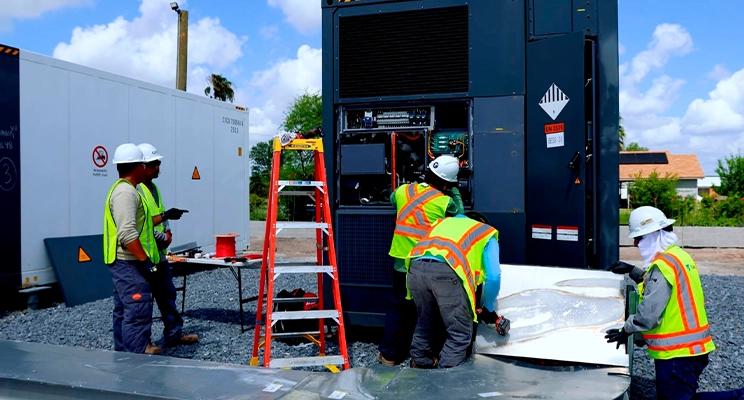
Our field crews bring technical expertise and precision to every step of project execution.
TruGrid Brings Projects to Life
At TruGrid, we do more than build battery projects.
We engineer systems that meet local demand, navigate interconnection, and support long-term operational goals.
With more than 10 GWh of storage and 10 GW of solar experience across North America,
our team delivers end-to-end engineering, procurement, construction (EPC), and integration services that are built to last.
Here’s what makes us different:
- Industry-Leading Integration: Our integration teams ensure each electrical component operates safely, securely, reliably, and flawlessly—delivering a cutting-edge energy system.
- Global Supply Chain Excellence: We rigorously evaluate and qualify the global supply chain to deliver cost-effective, reliable solutions through strategic partnerships with top-tier suppliers.
- Best-in-Class Project Execution: TruGrid leads with safety and innovation, completing projects on time and on budget while continuously improving processes and outcomes.
When reliability is on the line, TruGrid systems are ready to deliver.
Looking Ahead
With battery storage capacity expected to triple by 2030, the future of grid reliability is being built right now.
As Wood Mackenzie and ACP have reported,
energy storage is no longer a “nice to have.” It’s essential for meeting rising electricity demand, reducing outages, and responding to climate events.
At TruGrid, we’re proud to be part of that future—bringing utility-scale energy storage projects online with the speed, quality, and precision the grid demands.
Want to learn more?
Connect with TruGrid to explore how battery storage can strengthen your next project or current portfolio and help power through extreme weather.
Email us at sales@trugridpower.com.