250 Years of America’s Energy: Powering Progress
June 25, 2026

As the United States of America approaches its 250th anniversary on July 4, 2026, it’s worth reflecting on one of the most important drivers of American progress: energy.
It may not get as much attention as the Founding Fathers, the moon landing, or apple pie, but energy has quietly powered every chapter of American growth for the past two and a half centuries. From water-powered mills and steam locomotives to today’s transmission lines, utility-scale generation, and battery energy storage systems, it has remained the foundation of economic growth and progress.
Technology has changed, but the need for reliable infrastructure has not. So, in celebration of America’s big birthday, TruGrid is looking back on the most transformative moments of energy in the last two and a half centuries.
The Industrial Revolution Powers a Growing Nation
Long before automobiles, power plants, and data centers, America’s first major energy transformation was driven by water power and coal.
During the late 18th and 19th centuries, waterwheels powered mills, sawmills, and early manufacturing facilities throughout the country. As the Industrial Revolution gained momentum, coal emerged as the dominant fuel source, powering steam engines, railroads, factories, and industrial equipment that helped expand the nation’s economy.
The ability to generate mechanical power at a scale that was previously unimaginable transformed manufacturing, transportation, and commerce. Railroads connected cities and regions, factories increased production, and industries grew rapidly. By the late 1800s, coal had become the foundation of America’s industrial economy and helped lay the groundwork for the energy systems that would follow.
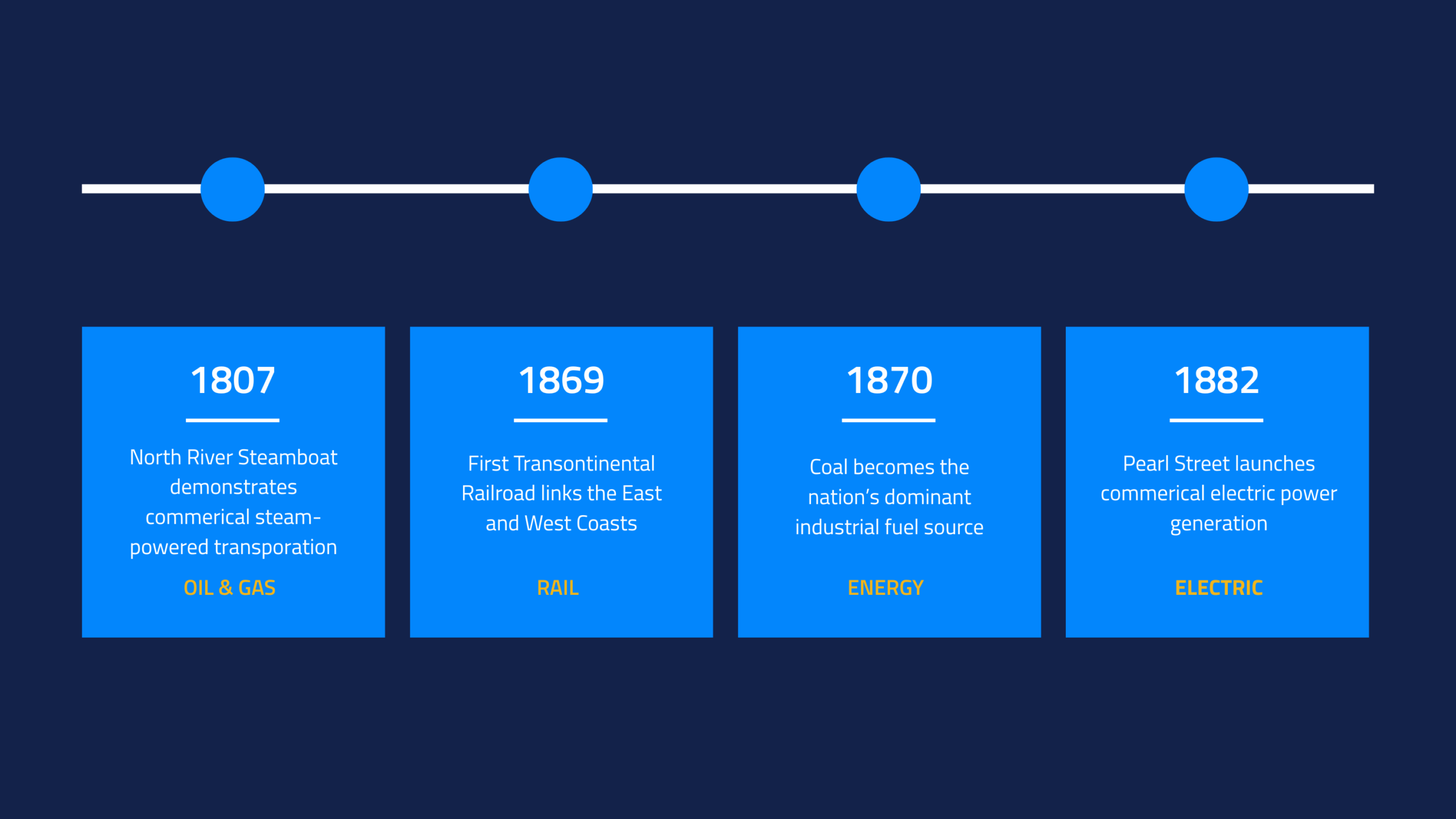
Sources: U.S. Energy Information Administration (EIA); U.S. Department of Energy (DOE); Library of Congress; National Park Service; Smithsonian Institution.
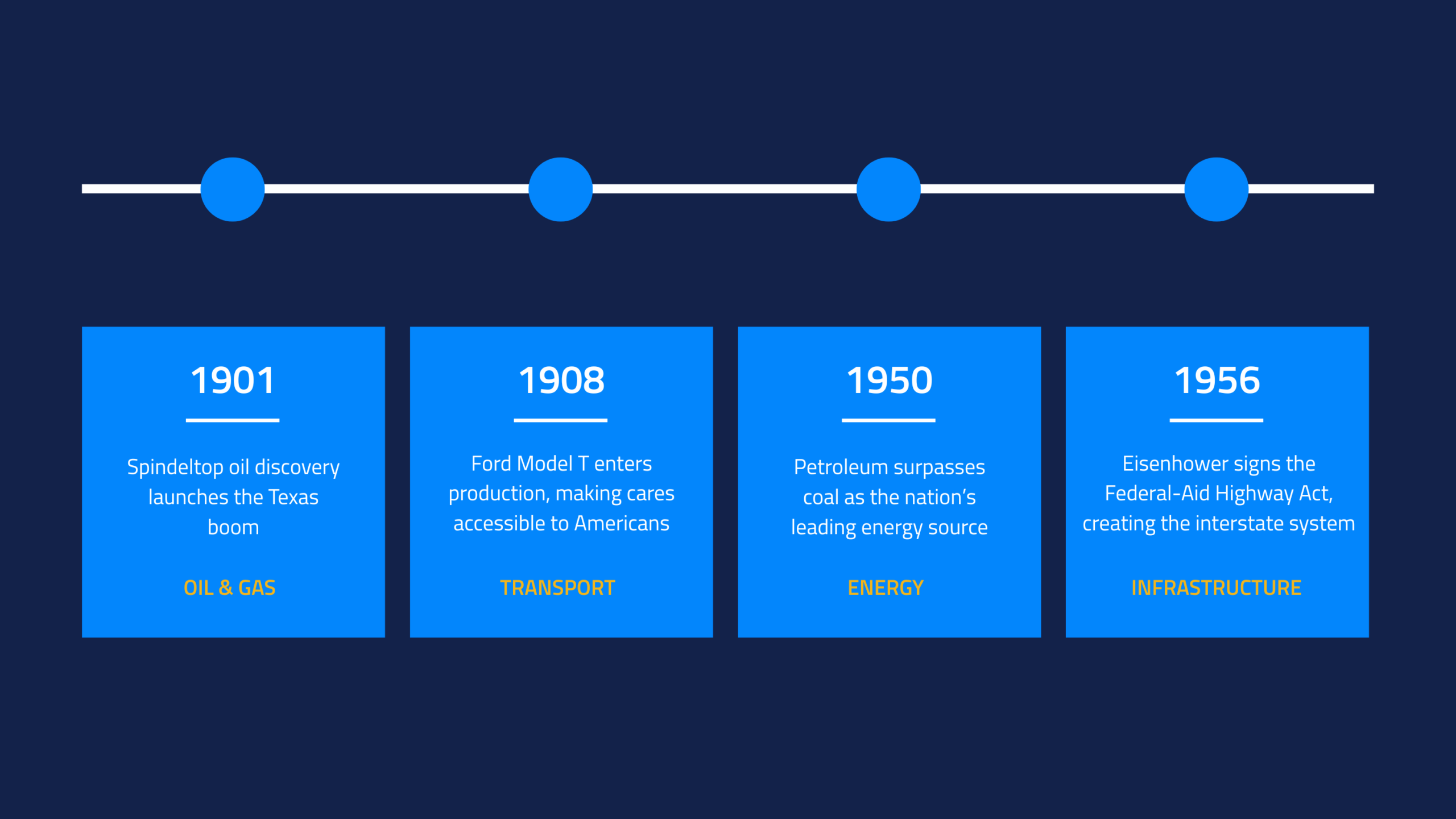
Key milestones in America’s energy evolution highlight how oil and gas, transportation, and infrastructure helped fuel economic growth throughout the 20th century.
Oil and Natural Gas Shape Modern America
During the late 19th century and throughout much of the 20th century, oil became a prominent fuel source and helped America become more mobile, connected, and industrialized than ever before. It fueled the rapid growth of automobiles, commercial aviation, and freight transportation.
Behind this transformation was a growing energy network capable of delivering fuel and power at an unprecedented speed and scale. As demand increased across homes, businesses, and transportation systems, energy infrastructure expanded to keep pace.
Advancements in pipeline infrastructure throughout the mid-1900s allowed natural gas to move farther and more efficiently than ever before. Communities that once relied on coal for heating increasingly shifted toward natural gas, while industries embraced it as a reliable fuel source.
The Electrification of America
While the concept of electricity has been documented and studied for multiple millennia, it wasn’t until 1882 that the first commercial power station opened in New York City. It served approximately 85 customers and 400 electric lamps. At the time, it was a revolutionary concept to have power produced in one location and then transported to another. And it laid the foundation for the modern electric grid and countless technological advancements.
The creation of the Rural Electrification Administration in 1935 helped bring electricity to millions of Americans who previously lacked access to power. Americans quickly embraced electric lighting, refrigeration, and household appliances. After all, hauling water, chopping wood, and relying on candlelight tend to lose their appeal once someone invents a light switch.
As electricity began to power factories, schools, hospitals, and businesses, it enabled the invention of modern communications, computers, and, eventually, the internet. Since then, it’s become the backbone of nearly every aspect of daily life.
Today, the United States consumes more than 4,000 terawatt-hours of electricity annually. The electric grid has become one of the most complex and important infrastructure systems ever built, supporting a population that has grown from 2.5 million Americans in 1776 to more than 340 million today.
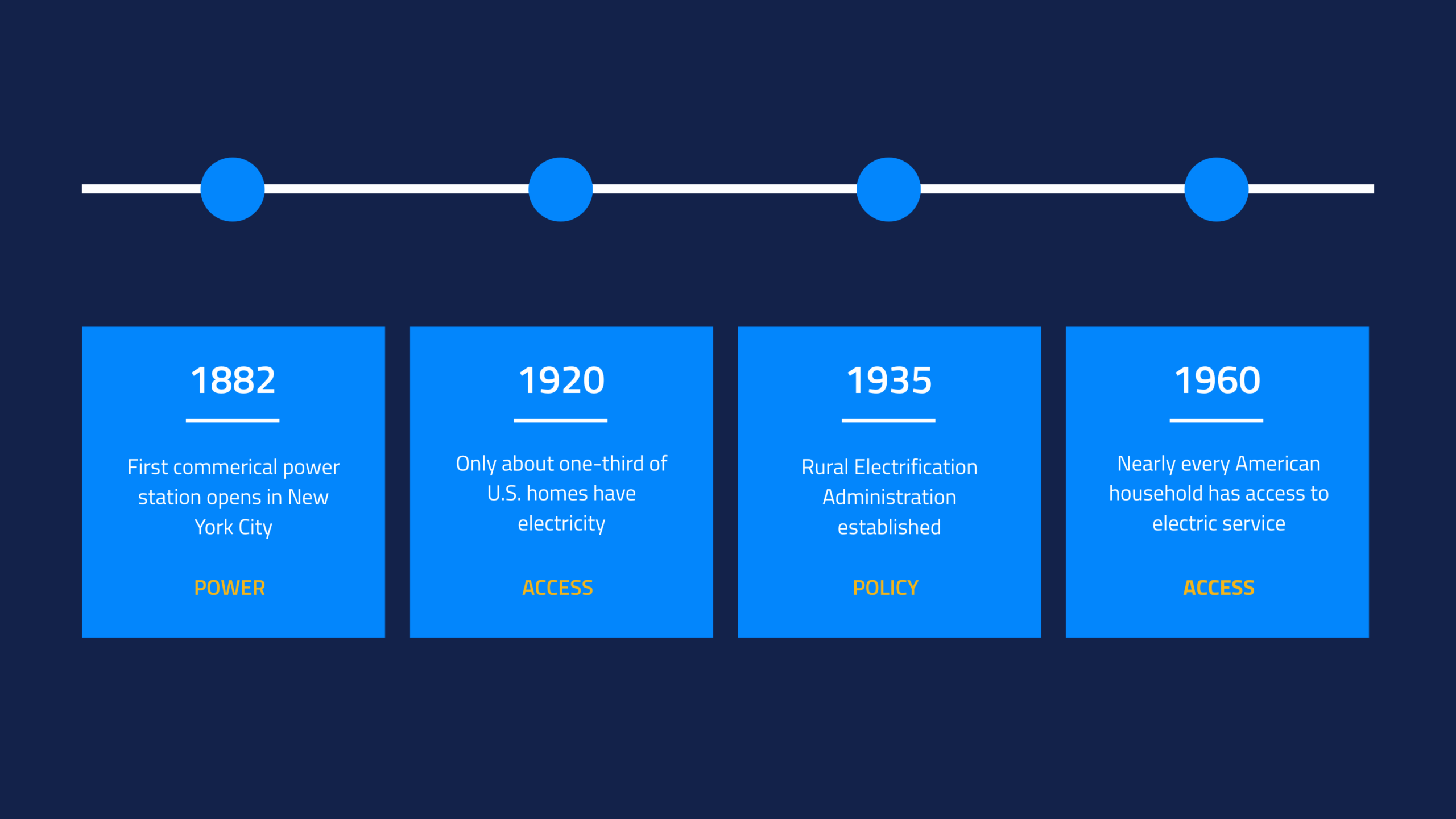
The growth of America’s electric grid transformed daily life, bringing reliable power to homes, businesses, and rural communities across the country.
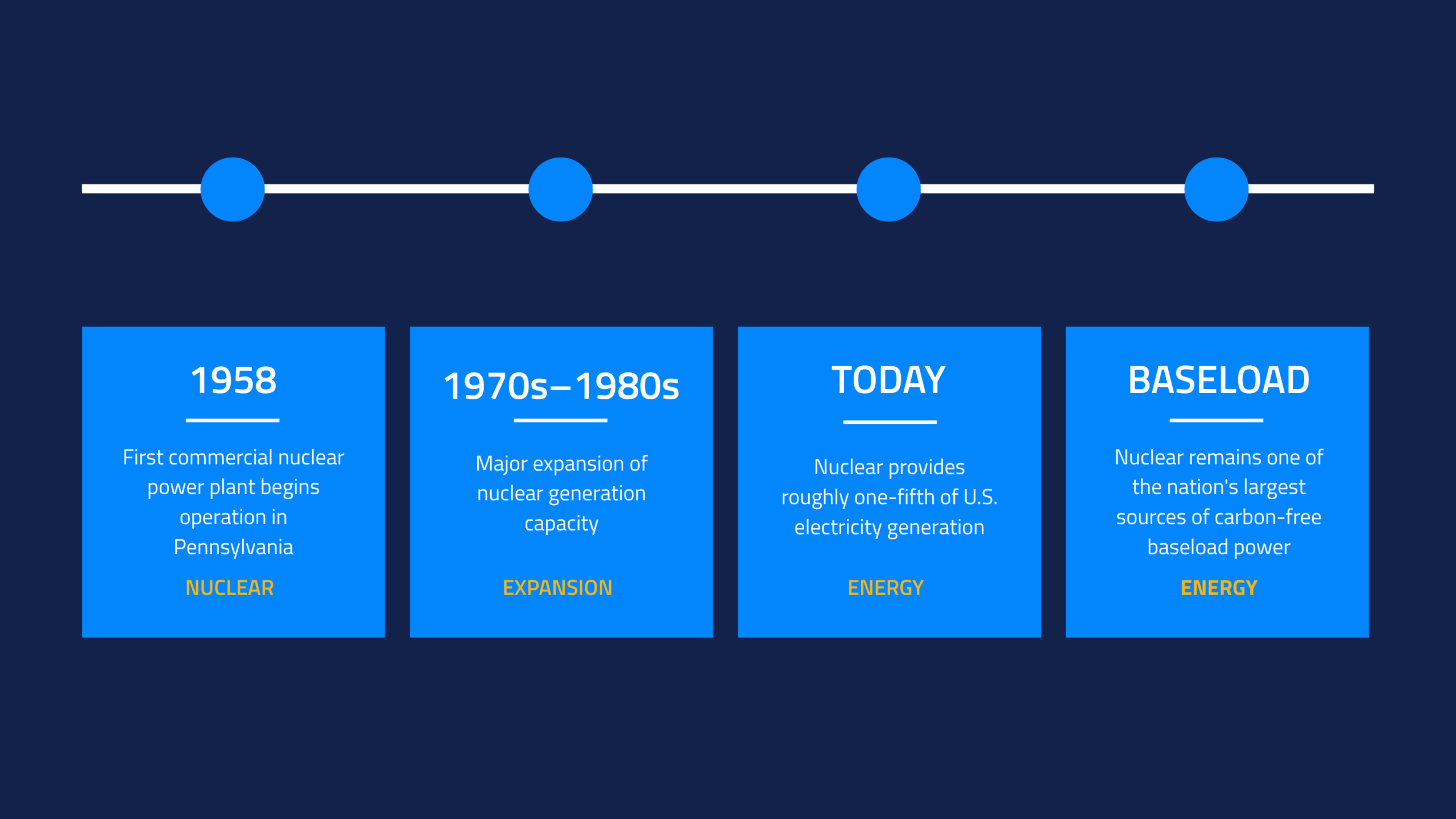
Sources: U.S. Energy Information Administration (EIA); U.S. Department of Energy Office of Nuclear Energy; Nuclear Regulatory Commission (NRC); World Nuclear Association.
Nuclear Power Joins the Energy Mix
As electricity demand continued to grow throughout the mid-20th century, nuclear energy emerged as a new source of large-scale, carbon-free electricity generation.
The first commercial nuclear power plant in the United States began operation in 1958. Over the following decades, utilities invested heavily in nuclear generation to meet growing electricity demand while diversifying the nation’s energy portfolio. Much like today’s energy transition, the challenge wasn’t simply generating more power. It was delivering reliable power at scale.
Today, nuclear power provides approximately 19% of U.S. electricity generation and remains one of the country’s largest sources of reliable, around-the-clock carbon-free energy. While nuclear never surpassed fossil fuels as America’s primary energy source, it became a critical component of the nation’s generation mix and continues to play an important role in supporting grid reliability.
A New Era of Energy Demand
As America enters its next chapter, the energy industry faces a familiar challenge: meeting exponentially growing demand.
For much of the late 20th century and early 21st century, electricity demand in the United States remained relatively stable as efficiency improvements helped offset population and economic growth. But beginning in the early 2020s, however, that trend started to reverse. New manufacturing facilities, electrification initiatives, and rapidly expanding data centers began driving significant increases in power demand across the country. Artificial intelligence alone is expected to become one of the largest drivers of electricity demand in decades.
At the same time, utilities, developers, and infrastructure providers are working to modernize aging infrastructure while maintaining reliability, resiliency, and affordability. The challenge isn’t simply generating more electricity. It’s to ensure the grid is stable enough to deliver power where and when it is needed.
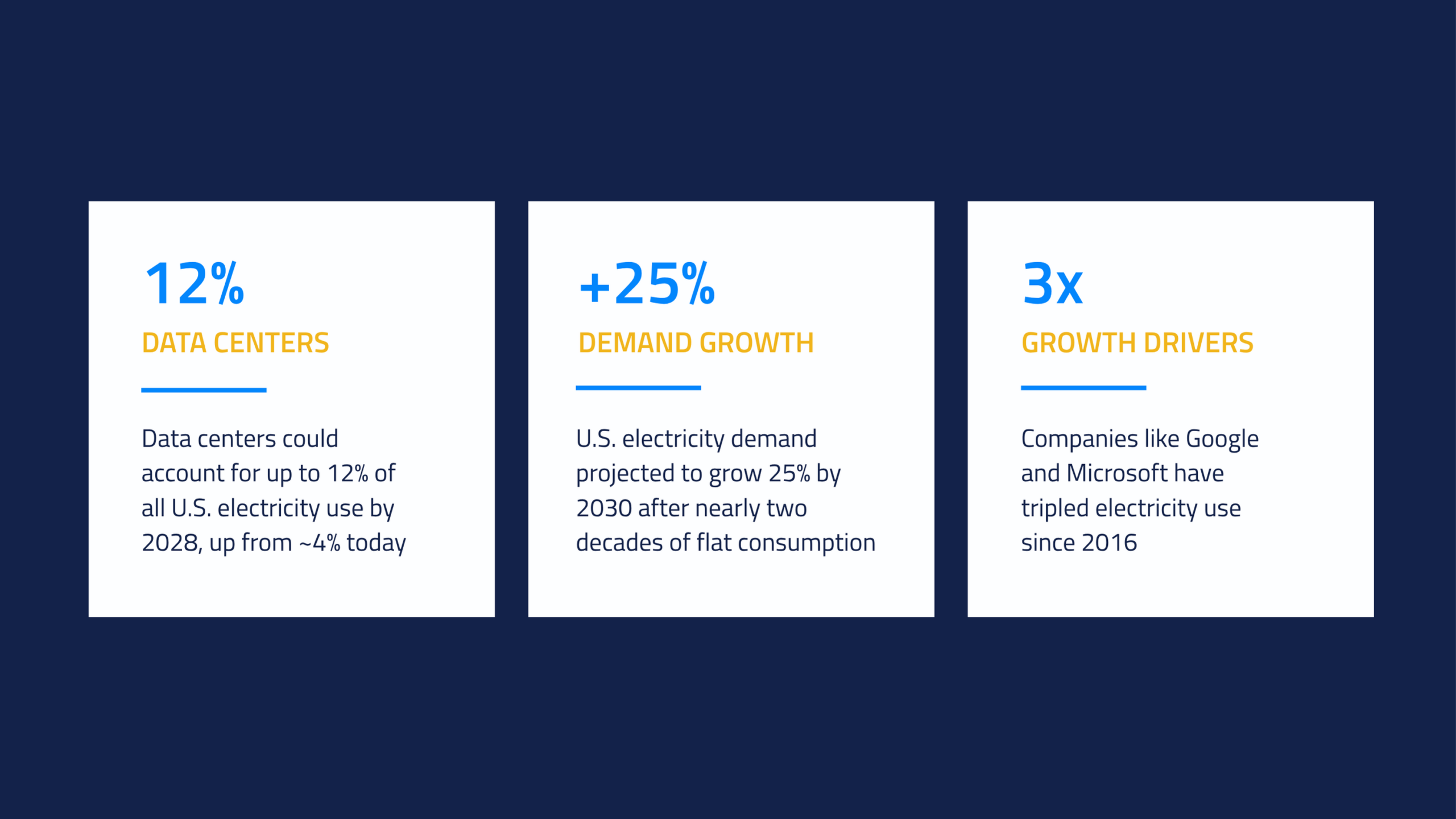
Sources: Electric Power Research Institute (EPRI), Powering Intelligence: Analyzing Artificial Intelligence and Data Center Energy Consumption; Grid Strategies, The Era of Flat Power Demand is Over.
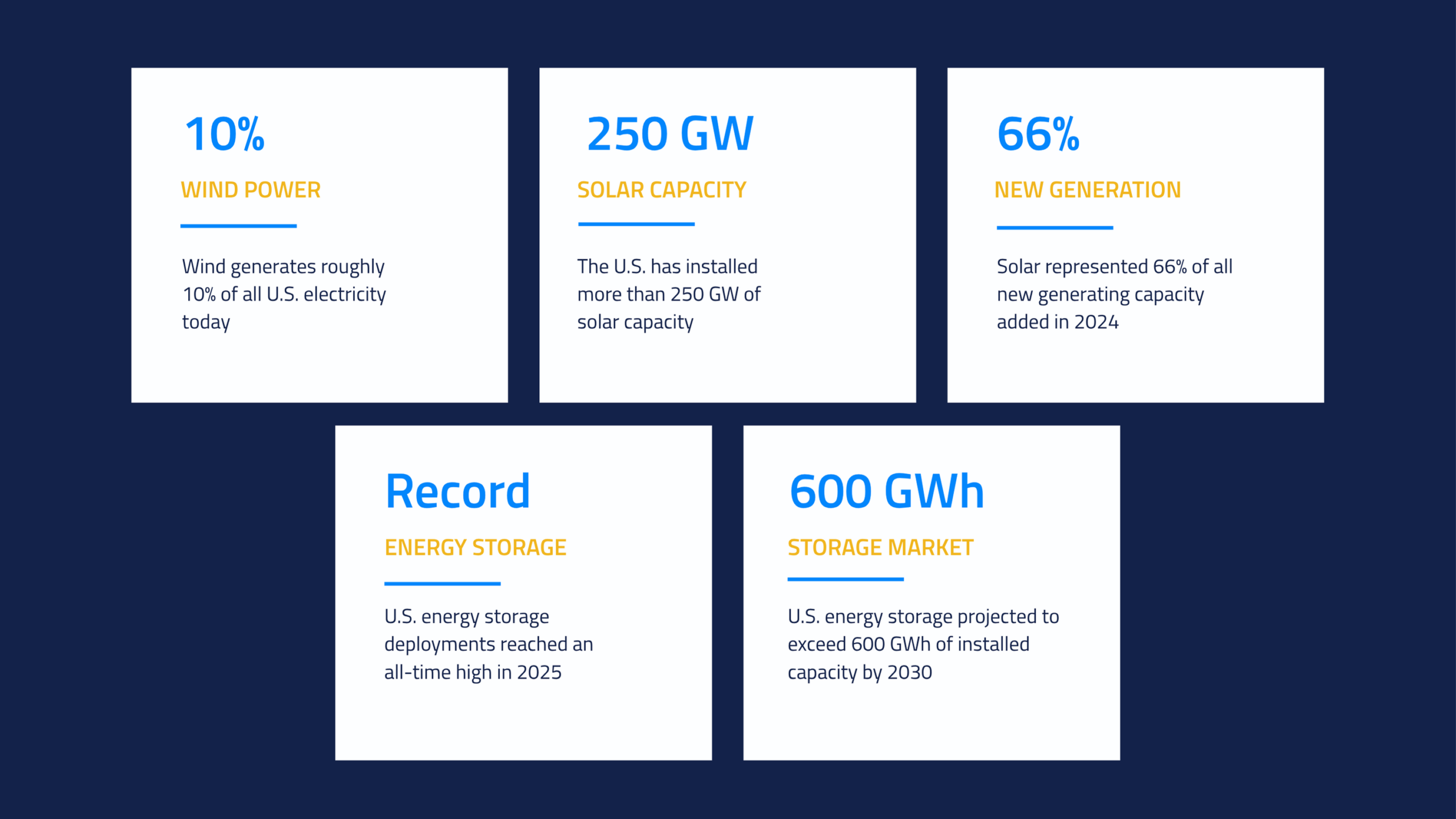
Sources: U.S. Energy Information Administration (EIA); Solar Energy Industries Association (SEIA) Solar Market Insight Reports; American Clean Power (ACP) Energy Storage Monitor; Electric Power Research Institute (EPRI) Powering Intelligence: Analyzing Artificial Intelligence and Data Center Energy Consumption.
Incorporating Renewable Energy Sources
America’s energy story (or any other country’s story) has never been about one resource replacing another overnight. Instead, it has been a story of evolution.
Coal helped power industrialization. Oil transformed transportation. Natural gas expanded access to reliable energy. Electricity became the backbone of modern life. Each new energy source addressed the needs of its time while building upon the infrastructure that came before it.
Over the past two decades, renewable energy has become one of the fastest-growing segments of the U.S. energy sector. Advances in technology, manufacturing, and project development have dramatically reduced the cost of renewable energy, making utility-scale wind and solar increasingly competitive with traditional generation sources.
Wind energy, which generated less than 1% of U.S. electricity in 2000, now provides roughly 10% of the nation’s electricity. Utility-scale solar has experienced even more dramatic growth as panel efficiency has improved and installation costs have declined. According to the Solar Energy Industries Association, the United States has installed more than 250 gigawatts of solar capacity, enough to power tens of millions of homes. In 2024 alone, solar accounted for approximately 66% of all new electricity-generating capacity added to the U.S. grid.
The growth of renewable energy has also fueled major investments in transmission infrastructure, battery energy storage systems, and grid modernization. Like the transmission lines, pipelines, and power plants that supported previous generations of growth, today’s energy infrastructure is helping utilities and developers deliver reliable power while meeting the nation’s evolving energy needs. Meeting these challenges will require thoughtful planning, strong engineering, and collaboration across every phase of project development.
At the same time, energy storage has emerged as one of the most important tools for supporting grid reliability and flexibility. It helps balance the power supply, support grid stability during peak periods, and improve the integration of renewable generation. What was once considered an emerging technology is now becoming a critical component of modern energy infrastructure. Click here to read our insights on meeting energy demand with battery storage.
Building the Next 250 Years
Today’s energy industry is facing a new set of challenges. As electricity demand continues to grow, the need for transmission expansion, grid modernization, and energy storage integration is shaping the next chapter of America’s energy story. And while the technologies powering our country will continue to evolve, one thing remains constant: innovation. From battery energy storage systems and renewable generation to advanced grid technologies and increasingly intelligent energy management systems, the way we generate, deliver, and manage power is changing faster than ever.
As the nation celebrates its 250th anniversary, the projects being planned, designed, and built today will help shape America’s next chapter. Like the generations before us, we are building infrastructure that will power the future.
Want to power the future by adding a BESS or solar project to your portfolio? Reach out to TruGrid to help build your next project by emailing sales@trugridpower.com.